Creative computing refers to the intersection of technology, programming, and artistic expression, fostering a dynamic space where innovation and creativity converge. It involves harnessing computational tools and techniques to explore, experiment, and create imaginative solutions. Creative computing transcends traditional boundaries, empowering individuals to express themselves through various mediums such as digital art, interactive installations, multimedia experiences, and generative designs. By blending coding skills with artistic sensibilities, practitioners of creative computing push the boundaries of what is possible, giving rise to unique and thought-provoking digital experiences. This interdisciplinary approach not only cultivates technical proficiency but also encourages a broader understanding of the symbiotic relationship between technology and the arts, fostering a community of innovators who leverage the power of computation to bring their creative visions to life.
Teachable Machine
Teachable Machine Pose is an innovative platform developed by Google that allows users to create custom machine learning models for recognizing and interpreting human poses. This user-friendly tool democratizes the process of building pose recognition models, making it accessible to individuals without extensive programming knowledge. To create a Teachable Machine Pose model, users can follow a straightforward process. First, they collect and upload a dataset of images containing various poses relevant to their application. The platform guides users through the process of labeling these images, associating each with the corresponding pose. This step is crucial for training the model to recognize and categorize poses accurately. Once the dataset is prepared, users can train their model with just a few clicks. Teachable Machine Pose simplifies the training process, handling the complexities of machine learning algorithms behind the scenes. After training, users can test their model in real-time, seeing how well it identifies different poses. The applications of Teachable Machine Pose are diverse, ranging from interactive art installations to fitness apps and gaming experiences. Its intuitive interface and accessibility make it a valuable tool for educators, artists, and developers interested in incorporating pose recognition into their projects without delving deep into the intricacies of machine learning. This innovative platform empowers users to explore the possibilities of human pose recognition technology, fostering creativity and experimentation in the field of machine learning.
Face Alignment Detector
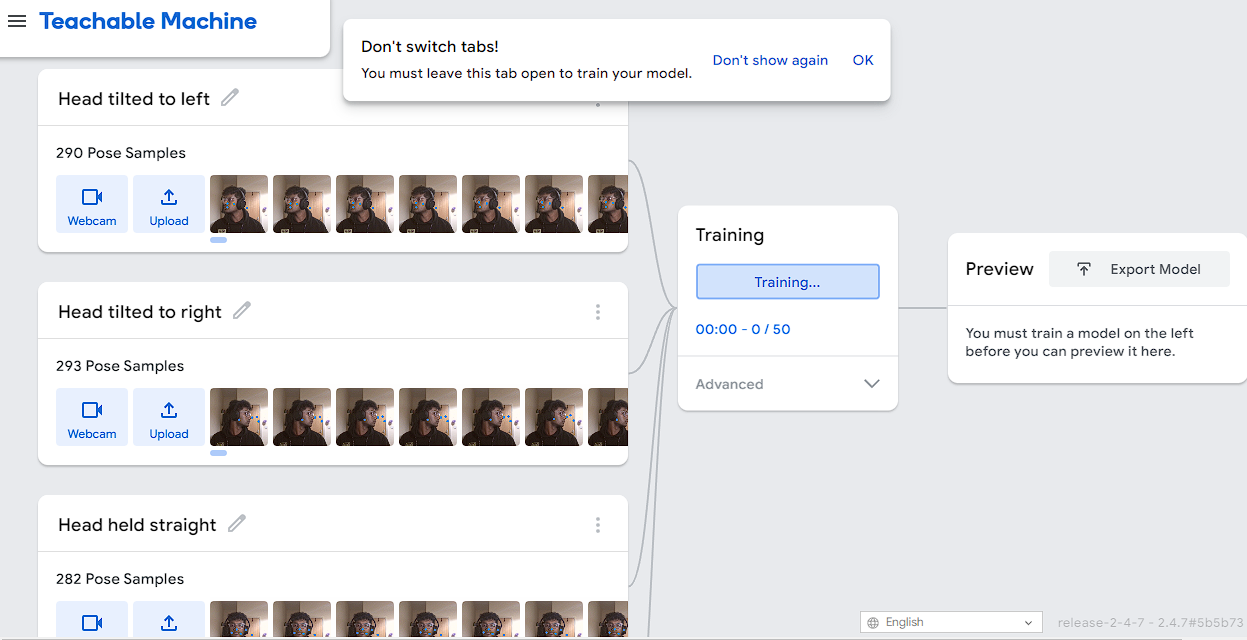
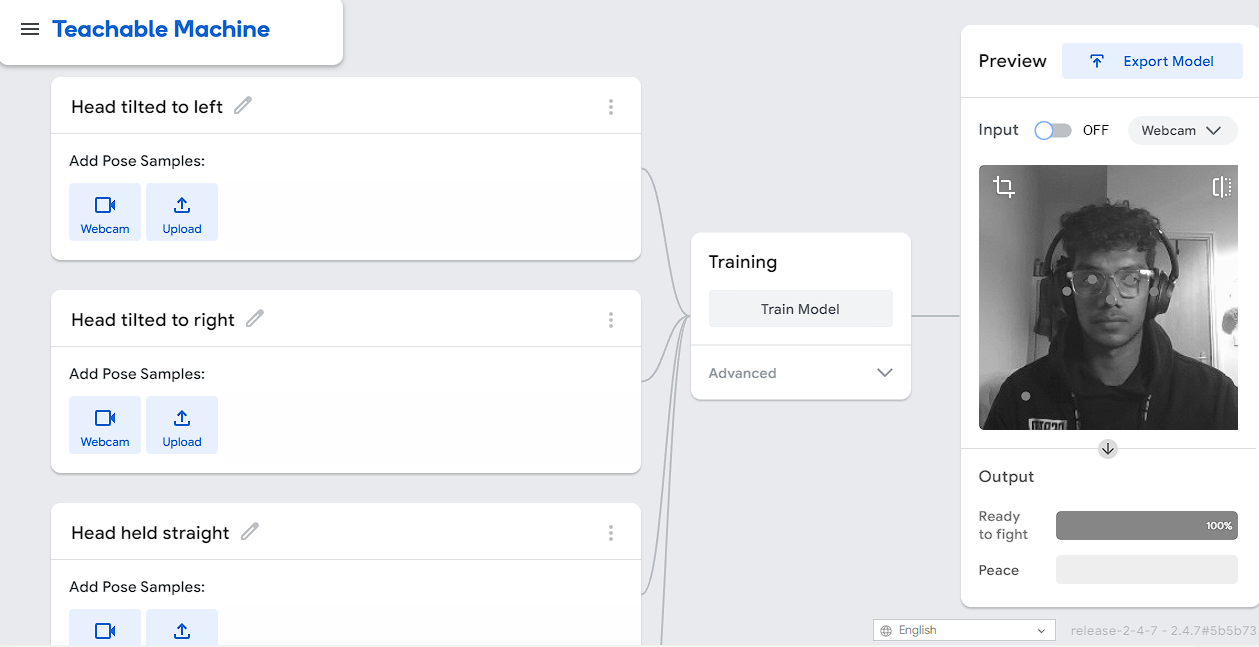
This simple model identifies the alignment of your face. It can recognize if your face is tilted towards left, right or is held straight. It used right over 280 samples in each class to train the model
Determine the class and upload samples: Create classes for and add adequate samples for improving the accuracy of your model.
Step 1
Step 2